
Currently, I am focused on measuring the carbon kinetic isotope effect (KIE) of the enzyme rubisco, which fixes CO2 during photosynthesis. In addition to working on rubisco, one of the goals of my postdoc is to learn the protein biochemistry techniques used by the rubisco scientific community so that I can apply them to other gas-dependent enzymes in my future work.
Current Projects
Constraining the KIE of the rubisco superfamily
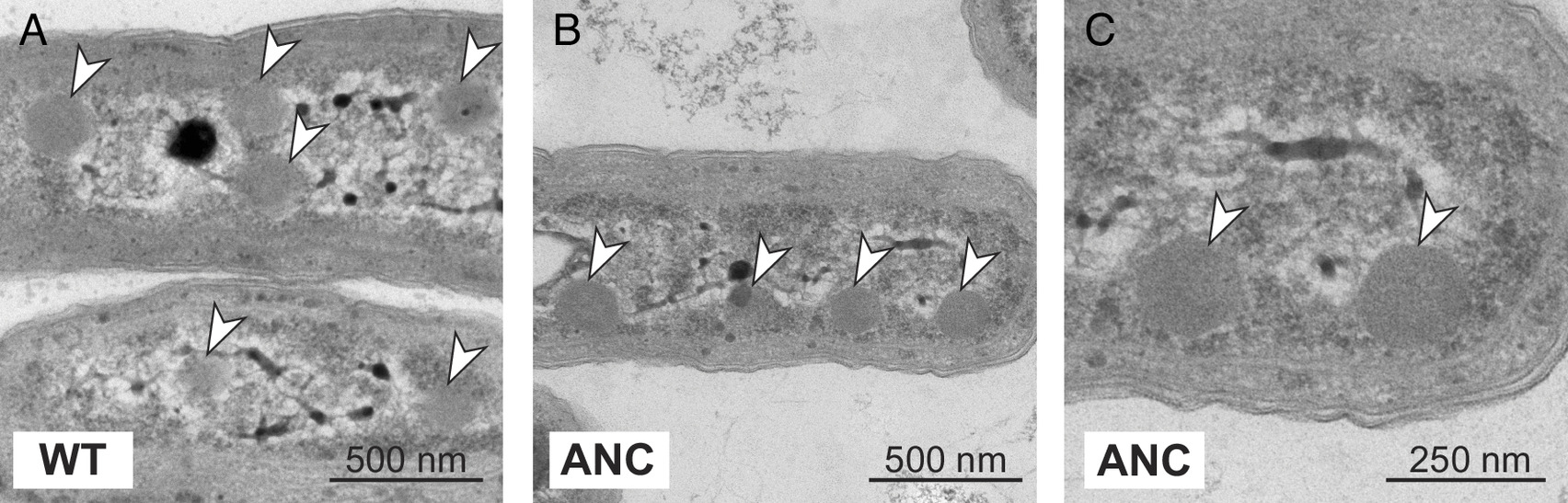
Although referred to in the singular, "rubisco" is really an enzyme superfamily composed of numerous protein clades. These diverse rubiscos are utilized by organisms in all three domains of life. One arm of my research focuses on characterizing these diverse rubiscos, including novel forms discovered through metagenomics (Wang et al. 2023 Biomolecules). I also leverage techniques like ancestral sequence reconstruction to test if evolutionary changes in the enzyme affect its KIE (Wang et al. 2023 PNAS); this work was highlighted in a commentary in PNAS (Kranz 2023 PNAS).
Constraining the reaction mechanism of rubisco
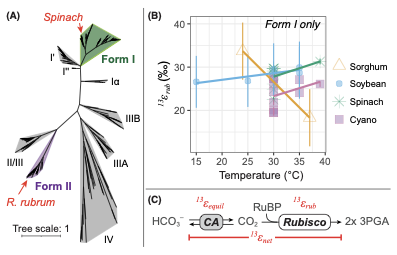
In addition to phylogenetic variations and differences in the rubisco protein tree, I am also examining how abiotic factors (e.g., temperature, metal cofactor, etc.) affect the KIE. Recently, I showed that both Form I and II rubiscos display a temperature-dependent carbon KIE (Wang et al. 2026 bioRxiv).
Developing techniques for rubisco purification
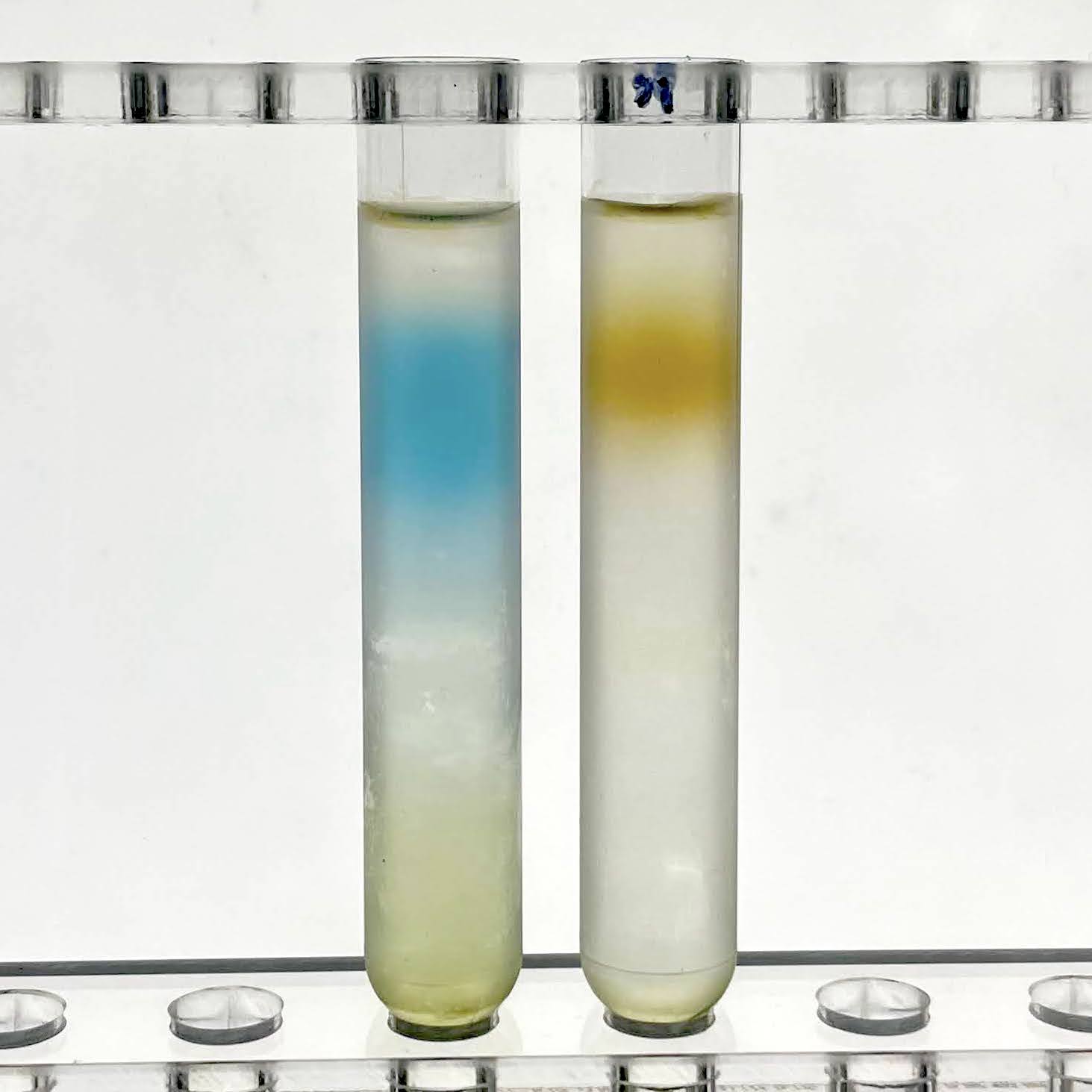
To characterize rubisco across the tree of life, one must first figure out how to obtain the enzyme from diverse organisms. I use two complementary approaches: i) expressing rubisco heterologously in E. coli and purifying it via His-tag affinity purification, and ii) purifying rubisco directly from its native host using techniques like sucrose density gradients, as shown in this image. Left: the extremophile Galdieria sulphuraria from Yellowstone Hot Springs; right: spinach from the local grocery store.
Other work
My postdoctoral work has also introduced me to the broader rubisco community, and I have had the pleasure of being part of an array of interesting projects, including: i) a deep mutational scan of rubisco using an engineered E. coli strain where enzyme activity is tied to growth (Prywes et al. 2025 Nature), ii) discovery of a non-cultured cyanobacteria encoding both Form I and II rubiscos from deep, anoxic oceans (Jaffe et al. 2025 PNAS), and iii) a short primer on the evolution and origins of rubisco geared towards biologists (Taylor-Kearney et al. 2024 Current Biology).
Past Projects
Nitrous oxide
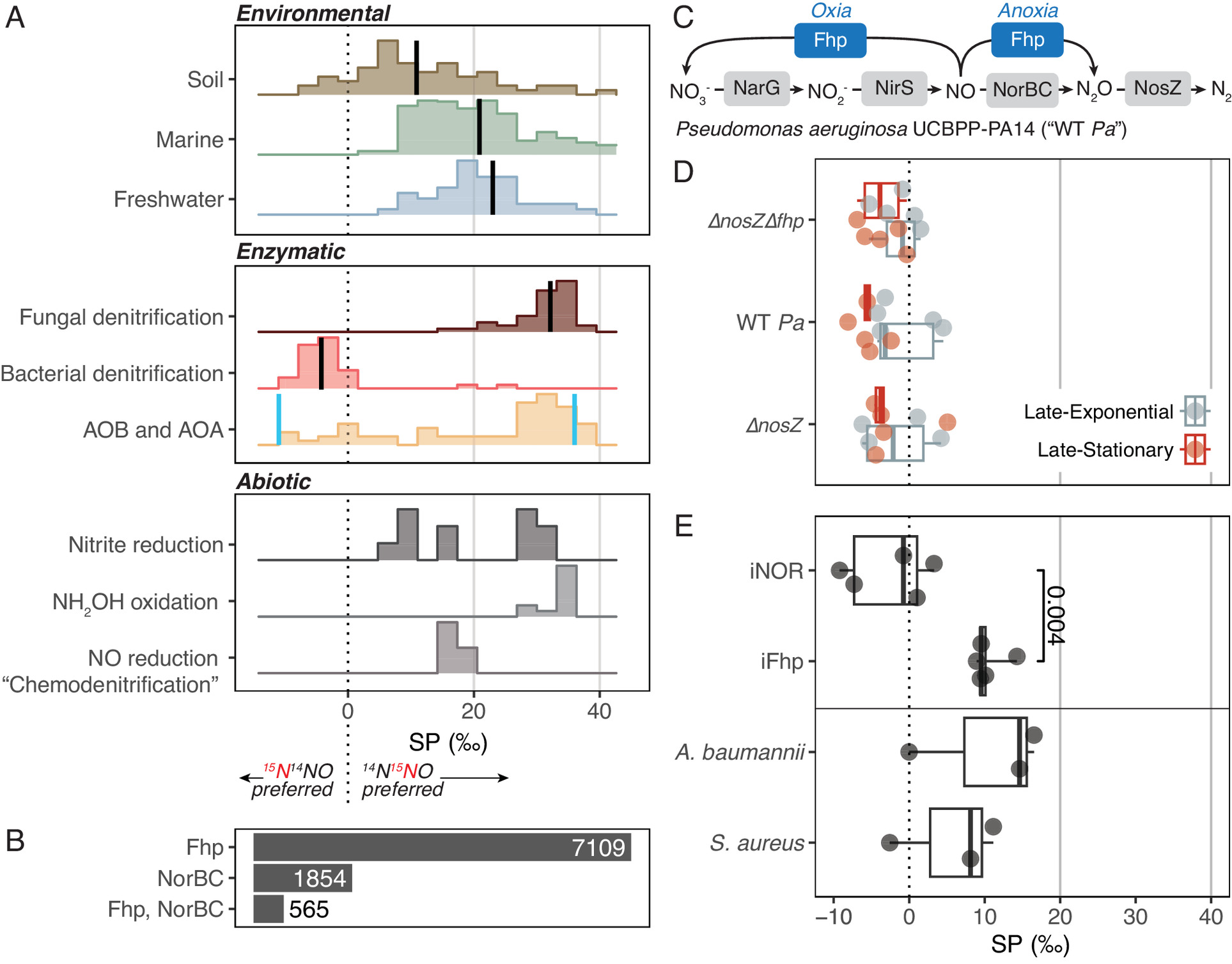
During my Ph.D., I also worked on enzymes that produce nitrous oxide (N2O), a potent greenhouse gas generated by diverse biotic and abiotic processes in soils, oceans and lakes, and even by pathogens in chronic infections. Therefore, untangling the overlapping pathways of N2O production is necessary for applications ranging from greenhouse gas mitigation to identifying metabolically active pathogens in disease contexts. One tool for source attribution is an intramolecular isotopic fingerprint called "Site Preference" (SP), which measures the relative intramolecular "preference" of natural abundance 15N in the central vs. terminal nitrogen position in the linear N2O molecule. Current interpretations of SP measurements assume that N2O production is tied to microbial growth and from enzymes like nitric oxide reductases ("NOR"). However, another more phylogenetically widespread class of enzymes - flavohemoglobin proteins ("Fhp") - also produce N2O from nitric oxide detoxification and not for energy conservation. I measured the N2O SP of Fhp from the soil bacteria and pathogens Pseudomonas aeruginosa, Staphylococcus aureus, and Acinetobacter baumannii and showed Fhp-derived N2O has a distinct isotopic fingerprint, providing a framework for better attribution of N2O sources in nature and disease (Wang, Lonergan et al. 2024 PNAS).
Carbon cycling in soils
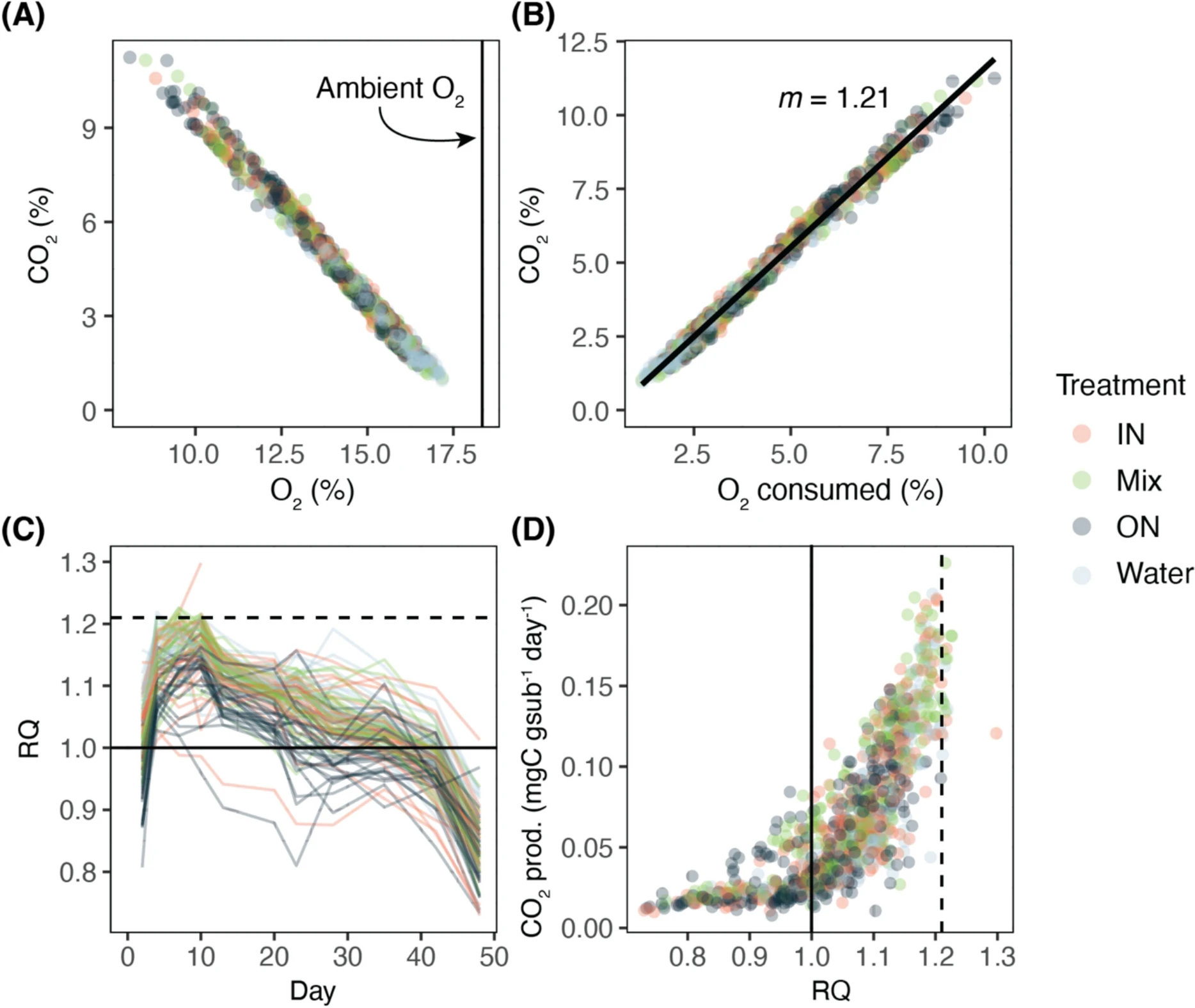
I completed an internship at Los Alamos National Labs in 2021 under the Department of Energy (DOE) Biological and Environmental Research (BER) program. I worked on a variety of projects that sought to understand how microbes affect carbon cycling and carbon storage in soils, including how reactive nitrogen species and precipitation influenced respiration rates and soil microbial community composition (Wang et al. 2026 Biogeochemistry; Kroeger et al. 2024 Sustainable Microbiology). Using controlled incubation experiments, I paired geochemical data (e.g., headspace gas concentrations, dissolved organic carbon and dissolved total nitrogen, respiratory quotients, carbon use efficiencies) with sequencing data (16S and 18S rRNA amplicon sequencing).